Case Assessment
Regional Repercussions After October 7
- Prepared by
- Dr. Hani Ramadan Taleb
- Published
- June 23, 2024
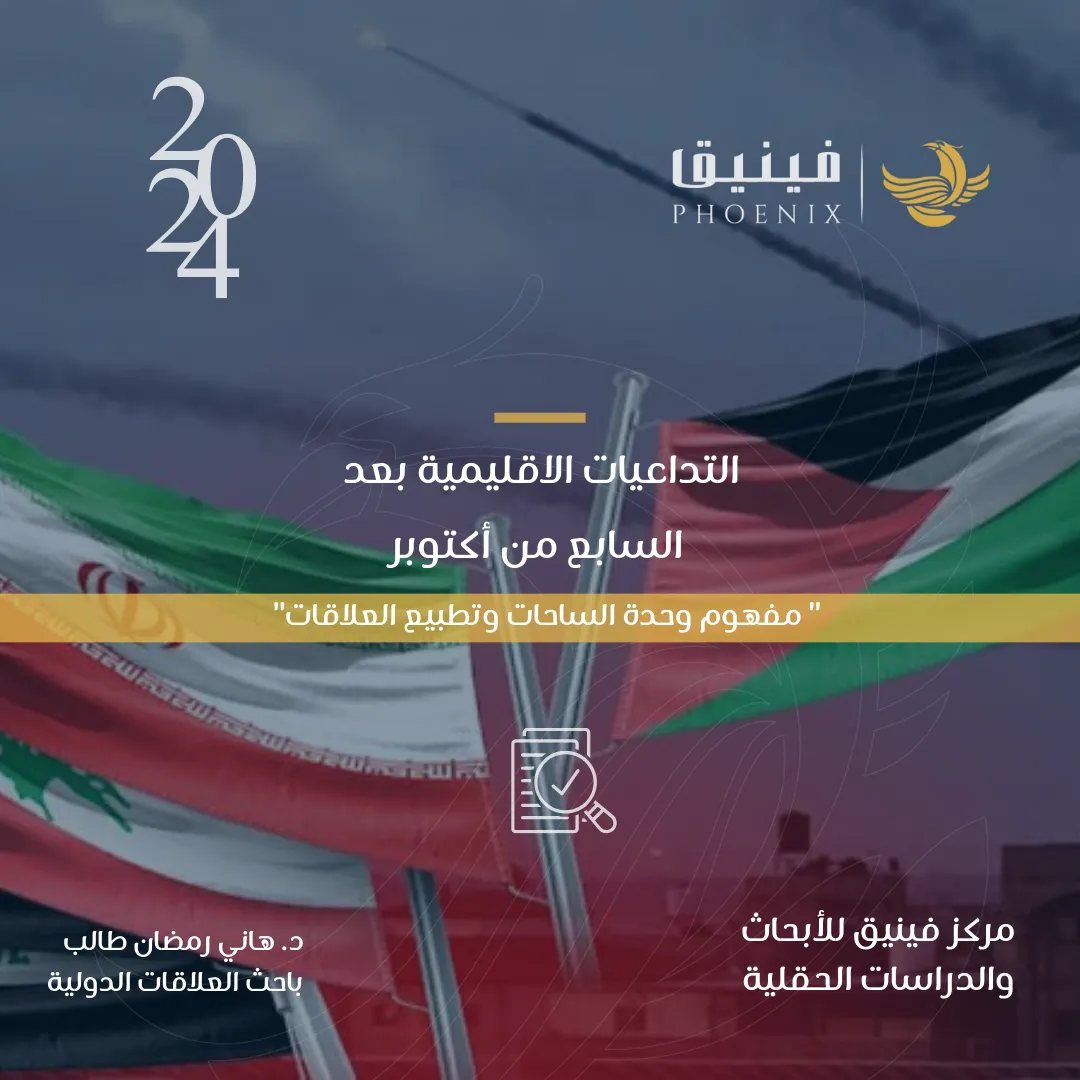
The October 7 operation — and the retaliatory war waged by the Israeli occupation state against Gaza afterward — constituted a dramatic, pivotal event in the present and future of the Palestinian cause, and consequently in the region at large, as current realities imposed a shift in the directions of regional policy. The general trend — the Arab trend in particular — had been moving at a feverish pace toward completing the formation of a regional security system led by Israel — under the sponsorship of the United States — as a defensive alliance against the Iranian threat to the security of the region's states, through the remaining Arab states catching up with the train of Arab-Israeli normalization that was launched decades ago, and which has in recent years witnessed active movement toward some states joining it, as the Kingdom of Saudi Arabia — one of the most weighty states in the region — stood on the threshold of signing an anticipated agreement to normalize relations with Israel through American mediation shortly before October 7.
However, what happened on October 7 and afterward froze everything in this context — at least officially declared — and consequently other political orientations emerged in the region, through the proposal of an alternative regional strategy by Iran and its proxies in the region, by attempting to apply the "unity of arenas" equation on the ground, amid the war currently raging in the Gaza Strip; but — after more than eight months of practical testing of the unity of arenas — the study finds that there is a wide gap between the slogan and actual practice on the ground, as what is known as the axis of resistance has, since the outbreak of the war, continued to operate mainly according to a logic and calculations related to the internal circumstances of each arena separately, alongside not exceeding the bounds of proportionality of action and reaction toward the Israeli occupation army, within the framework of an equation of multiple arenas of support for the Gaza Strip arena, rather than full unification and engagement with it — contrary to what the deputy head of Hamas's political bureau, Saleh al-Arouri, had warned shortly before October 7: that any resumption of assassination operations by Israel against the movement's leaders could ignite a devastating regional war.
In short, the October 7 operation may have contributed significantly to tipping the scales toward a regional political orientation of "unity of arenas" from October 7 until today; but it did not eliminate the existence of other political orientations (normalization), or even the possibility of their return once the war lays down its burdens — and it is even possible before that.
Prepared by:
Dr. Hani Ramadan Taleb
Related Publications
Gaza Between Three Tracks: The Battle of Wills Over "The Day After the War"
August 6, 2026
American-Israeli Disputes Over Managing the Second Phase in Gaza: "A Clash of Visions or a Division of Roles?"
February 28, 2026