
Political Papers
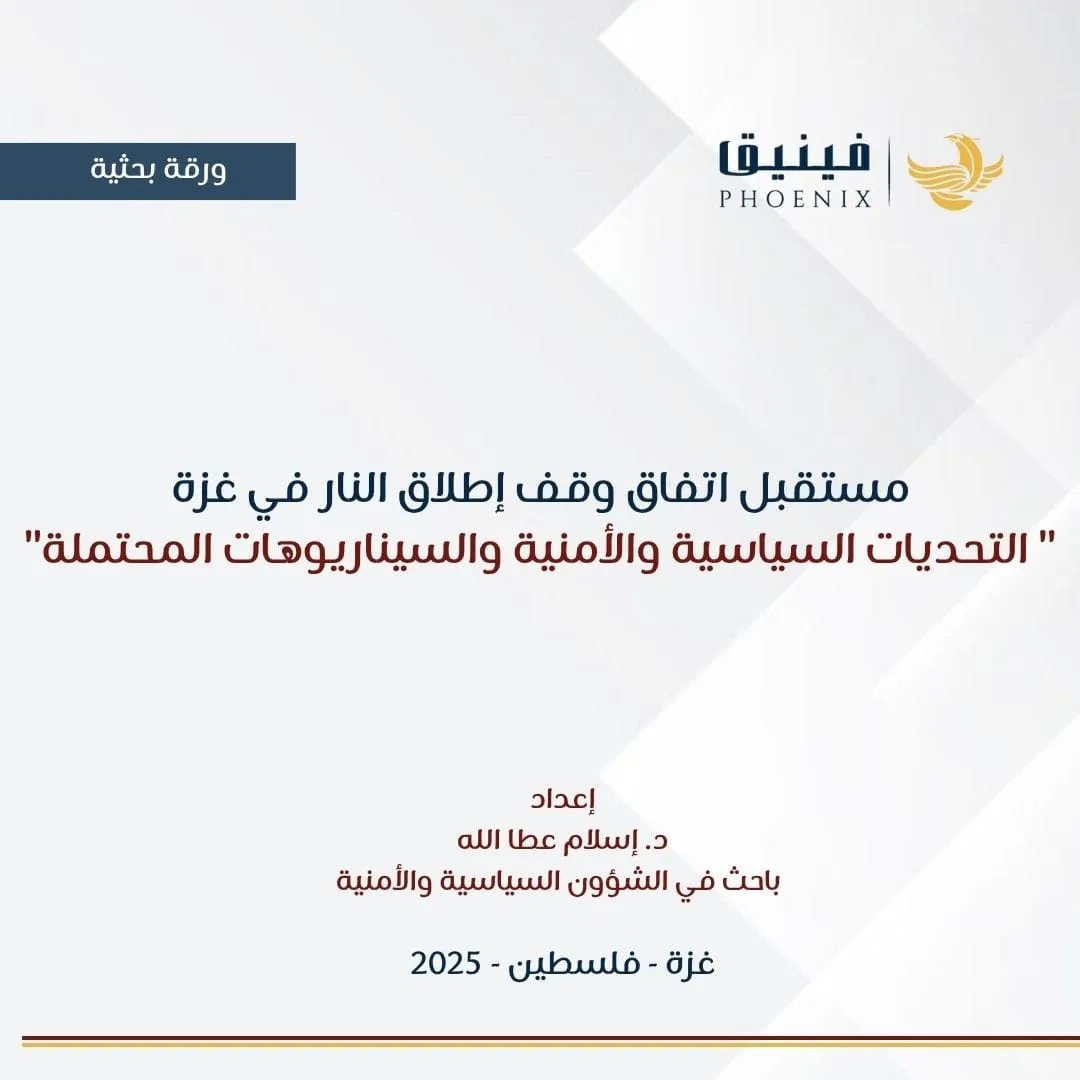
The Future of the Gaza Ceasefire Agreement
- Published
- November 20, 2025
Introduction
This paper aims to present a comprehensive scholarly analysis of the political, security, and humanitarian dimensions related to the announcement of the ceasefire in the Gaza Strip under American sponsorship, known in the media as the "Trump Plan," which came after two years of a wide-scale war that Israel termed the "war of annihilation." The study proceeds from the hypothesis that the agreement, although a first step toward ending military operations, does not constitute a comprehensive and final strategy for resolving the Palestinian-Israeli conflict, but rather represents a preliminary framework that lacks clarity regarding the mechanisms of implementation and the transitional phase for governing Gaza after the war.
The analysis is based on an assessment of the positions of the main parties: Palestinian, Israeli, and regional, with a focus on the strategic ambiguity surrounding the transitional phase, and the prospects for activating international solutions through the Security Council, particularly the draft resolution proposing the deployment of international stabilization forces and the establishment of a temporary transitional governing authority in Gaza, to ensure the safe and sustainable implementation of the agreement. This international orientation aims to bridge the gap between the temporary ceasefire and the transition to the phase of reconstruction and the management of civil affairs independently of the armed factions, in a way that enhances the prospects for the Strip's medium-term stability.
Related Publications


The Weapon of Starvation in the Gaza Strip as a War Crime: Between International Humanitarian Law and Its Humanitarian Repercussions
May 26, 2025

Political, Security, and Humanitarian Developments in the Gaza Strip During the Second Year of the War
May 25, 2025