Case Assessment
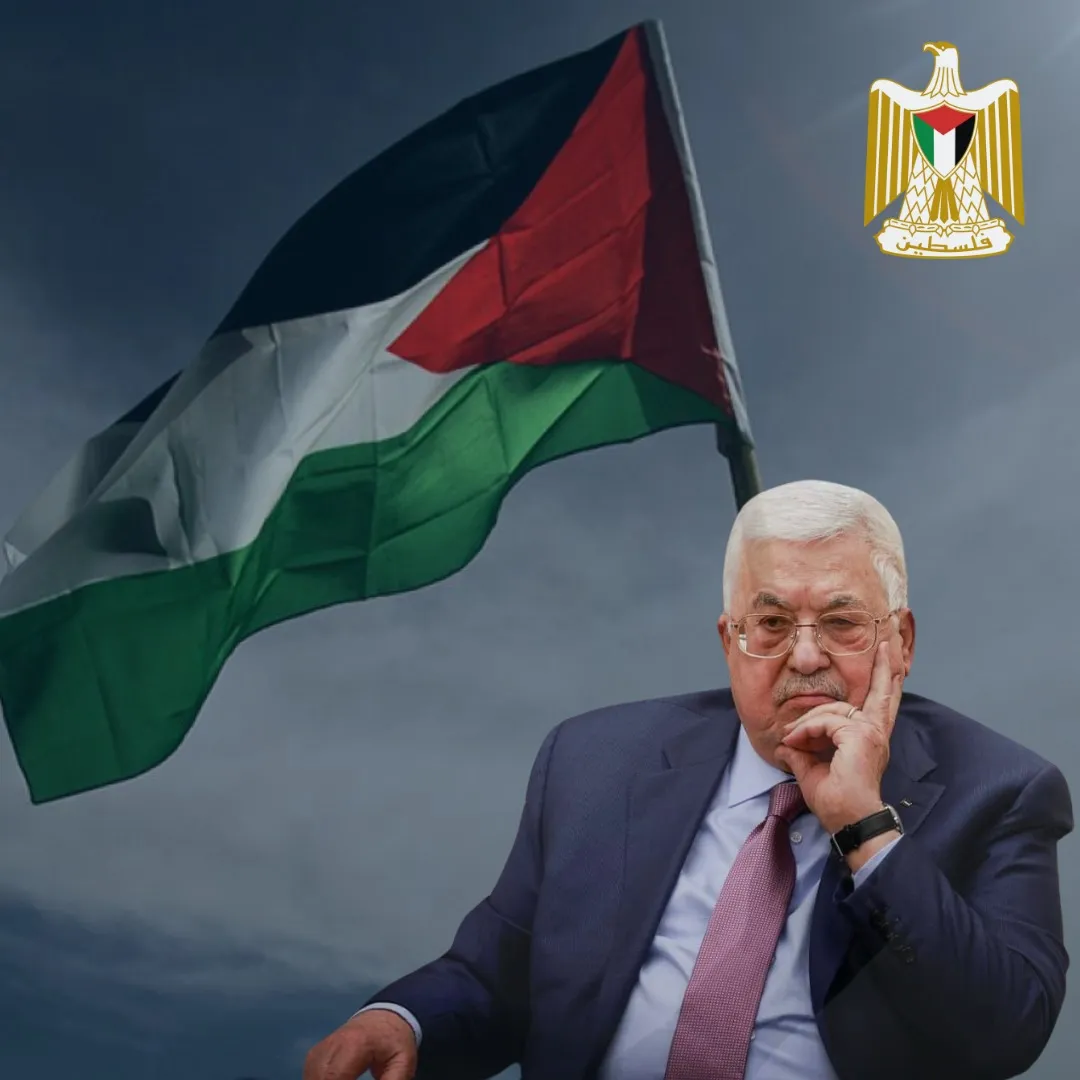
Political Position Assessment Paper: "The Palestinian Authority Between Self-Reform and Functional Erosion... What Fate Awaits It?"
- Published
- April 25, 2024
Introduction:
Political authorities take shape within a historical context, with its own subjective and objective conditions and givens, and with contexts within which they are born and at which they end. These contexts or trajectories for the growth and development of political authority depend on numerous factors, and are subject to a set of conditions, among the most prominent of these factors: the historical components of the society of this authority — its parties and political and social formations — in addition to the symbolic components of historical leaders or founding leaders, who paved the way for this authority or led it.
This authority is likewise subject to the general conditions of the surrounding and intertwined political geography, in addition to the economic pattern of the authority's society and its surroundings, particularly the components of wealth and the forms of its distribution, and the manner in which wealth is monopolized by the political authority. The system of political authority is also affected by other factors, such as levels and quality of education and the cultural and value system of the authority's society, and the extent of the role and control of ideologies and religions in the systems of relations between the components of society, and the level and degree of democratic awareness and practice, and other subsidiary factors that there is no room to enumerate here.
The birth of the Palestinian National Authority came about deprived of its "national" character as a definition, and confined to its authoritative function as a product of the Oslo Accords, between the Palestine Liberation Organization led by Yasser Arafat, and the government of Israel led by Yitzhak Rabin. These accords, characterized by ambiguity at the level of the text, contained many complications and problems at the level of substance, regarding Palestinian national rights and historical solutions — or what was called the final-status issues, which were left to the unknowns of an ambiguous future that accompanied the rise and development of the Palestinian Authority, which witnessed two eras: the first led by the late Yasser Arafat, characterized by its own particular condition, which we might call, as a description rather than a definition, the era of Yasser Arafat — "the Arafatist era" — which was an extension of the late Yasser Arafat's leadership of the Palestine Liberation Organization. The second era is the era of President Abbas and Hamas, an era which we will address through analysis, evaluation, and assessment.
The era following the late Yasser Arafat was characterized by Hamas's entry into the structure of the Palestinian Authority, at the level of the legislative structure and the executive structure. Hamas, which won a majority of the seats of the Legislative Council in the 2006 elections, and was tasked with forming the government on that basis, became an integral part of the Palestinian Authority's system, even after what is known as the division took hold, and Hamas's control over the Gaza Strip, and the removal of Abu Mazen and his political party, the Fatah movement, to the West Bank — which produced two divided political systems within the structure of the Palestinian National Authority, with President Abu Mazen retaining the "grandmother," the Palestine Liberation Organization, which he worked hard to preserve in its old structure, in order to prevent the participation of Hamas and Islamic Jihad.
And despite the state of ambiguity in the relationship between the Palestine Liberation Organization — which was emptied of all its national content, tools, and roles, and was subjugated to the Palestinian National Authority in a dangerous political inversion that passed without objection or opposition from the various political forces — the Palestinian National Authority, which was considered one of the arms of the Liberation Organization, swallowed the Organization and turned it into a tool in the political conflict that the structure of the Palestinian Authority witnessed after 2006. And if the late Yasser Arafat dealt the first great blow to the Liberation Organization, in its National Council convened in Gaza in 1998, which saw the greatest act of relinquishing national rights, through the amendment of the Palestinian National Charter, to accommodate the conditions of the occupation government and the requirements of the international community.
The next blow the Liberation Organization received, in the era of President Abu Mazen, was represented first in disabling the role of the Palestine Liberation Organization in managing the major Palestinian communities outside the jurisdiction of the Palestinian Authority, and beginning the process of dismantling the Liberation Organization, and reformulating it away from the democratic process and its mechanisms, and entrenching the one-man rule that President Abu Mazen established, which turned the Liberation Organization into a hollowed-out structure, stripped of its effective tools, and governed by the absolute rule of one man in its formations, decisions, and roles. This model — the model of one-man rule, based on and resting upon security tools — was transferred by President Abu Mazen to the Palestinian Authority.
Related Publications


Gaza Between Three Tracks: The Battle of Wills Over "The Day After the War"
August 6, 2026
American-Israeli Disputes Over Managing the Second Phase in Gaza: "A Clash of Visions or a Division of Roles?"
February 28, 2026